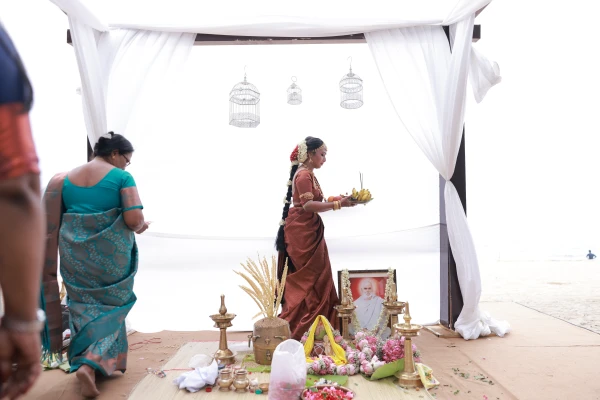

Description
The Leela Kovalam, A Raviz Hotel occupies a dramatic clifftop setting overlooking the Arabian Sea at Kovalam in Kerala’s Thiruvananthapuram district. Spread across approximately 67 to 68 acres of tropical greenery, the resort is positioned between crescent-shaped beaches, coconut groves and elevated viewpoints. This location gives weddings and corporate events the character of a coastal destination while keeping them reasonably close to Kerala’s capital city. The clifftop landscape distinguishes the property from a conventional beachfront hotel. Guests experience panoramic views, sea breezes and sunsets from different parts of the resort, while functions can be organised across indoor halls, gardens and beachfront settings. A destination wedding can therefore offer a different atmosphere for the welcome, mehendi, sangeet, ceremony, reception and farewell brunch without moving guests to another property. Thiruvananthapuram International Airport is approximately 15 kilometres from the resort. The hotel describes the transfer as taking around 20 to 25 minutes, although event planners should normally allow between 30 and 45 minutes. Traffic near the airport, East Fort, the city bypass, Vizhinjam and Kovalam can extend the journey, particularly during peak hours, public holidays and major festivals. The airport has domestic connections to several important Indian cities and international services to destinations in the Middle East and selected Asian markets. This connectivity is particularly valuable for Kerala destination weddings, where a substantial number of guests may arrive from Gulf countries. Coordinated airport transfers can be arranged through luxury cars, vans and coaches according to flight timings. A dedicated airport hospitality team should maintain updated arrival manifests and coordinate with the resort’s room-allocation desk. Guests can be welcomed at the terminal, assisted with luggage and transferred in groups. Senior family members, children, artists and guests requiring mobility assistance should receive vehicles according to their individual needs rather than being placed in general coach transfers. Thiruvananthapuram Central Railway Station is approximately 15 to 16 kilometres from the property and is the most practical railhead for long-distance guests. It connects the capital with Kochi, Kollam, Alappuzha, Kottayam, Kozhikode, Mangaluru, Chennai, Bengaluru, Mumbai, Delhi and several other cities. The drive from the station generally takes between 30 and 45 minutes, depending on traffic. Nemom Railway Station is geographically closer to parts of Kovalam, but it has fewer long-distance train services. Thiruvananthapuram Central should therefore remain the primary arrival point unless the selected train has a confirmed stop at a nearer station. Railway transfers should be scheduled separately from airport arrivals to prevent congestion at the hotel’s reception. The resort is connected by road through the Thiruvananthapuram–Kovalam corridor and National Highway 66. Guests from Kollam and northern Kerala approach through Thiruvananthapuram, while those travelling from Kanyakumari and southern Tamil Nadu can reach Kovalam through Neyyattinkara and the southern highway. Poovar, Vizhinjam and other coastal destinations are also within practical driving distance. Kovalam has public and private bus connectivity with Thiruvananthapuram, Neyyattinkara, Vizhinjam and surrounding towns. However, organised transport is preferable for a destination wedding or corporate conference. Resort guests may be carrying substantial luggage, wedding attire, presentation material or production equipment, making direct transfers more comfortable than local buses. The resort’s elevated terrain requires internal transportation planning. Rooms, villas, halls, restaurants, pools and outdoor event spaces are distributed across a large property with level changes. Buggies or resort vehicles may be required for elderly guests, children and people with restricted mobility. Guest itineraries should clearly identify reporting points and travel time between venues. Vendor movement must be planned separately from guest transportation. Décor structures, flowers, LED screens, sound equipment, generators, furniture and catering material should arrive through designated service routes. Large trucks must have approved reporting times, unloading areas and parking locations. The planner should also consider the time required to move equipment from the service entrance to a beach or clifftop event space. The location supports an attractive destination itinerary. Guests can visit Kovalam’s beaches, Vizhinjam, Poovar Backwaters, the Kerala Arts and Crafts Village, Sree Padmanabhaswamy Temple, Napier Museum and Kuthiramalika Palace. Excursions to Kanyakumari can be arranged for guests extending their stay, although this requires a separate full-day schedule. The coastal climate has a direct influence on wedding production. October to March is generally preferred for outdoor celebrations. Summer events require shaded areas, hydration stations and carefully chosen timings, while the monsoon can bring heavy rain and strong wind. Outdoor functions should always have an indoor alternative supported by an approved changeover plan. Wind can affect fabric installations, floral arches, mandaps, projection screens and suspended décor. Salt air and moisture can also influence electronic equipment. All structures should be properly secured, and electrical connections must be protected. Beach ceremonies additionally require attention to tides, sand stability, sound restrictions and environmental responsibilities. Red Carpet Events can coordinate guest manifests, airport and railway hospitality, accommodation, local transportation, vendor logistics, sightseeing and internal resort movement. The Leela Kovalam offers the privacy and scenery of a luxury coastal destination while remaining accessible through Thiruvananthapuram’s airport, railway station and road network.